
Hi, I’m Tesni(She/Her)
Clinical Psychologist & Founder of Wildflower Psychology
My work is centered on supporting girls, women, and gender-diverse individuals who are navigating anxiety, overwhelm, and life's challenges in a world that is not always designed with their unique needs in mind.
I believe that therapy and assessment should be collaborative, deeply validating, and free from judgment. My goal is to help you make sense of your experiences, reconnect with your innate strengths, and find sustainable ways forward that align with who you truly are.
My Approach & Special Interests
I have broad experience working with children, adolescents, adults, and families across both clinical and educational settings. I am deeply passionate about helping people develop a compassionate understanding of themselves.
I specialise in and welcome clients seeking support with:
Neuroaffirming Assessments: Exploring learning profiles and neurotypes (including Autism and ADHD) to help you or your child access clarity, validation, and tailored support.
Child, Youth & School-Based Support: Helping children and teens navigate school burnout ("school can't"), learning differences, sensory processing, and emotional regulation.
Women’s Mental Health & Wellbeing: Supporting women and gender-diverse adults navigating anxiety, depression, life transitions, and the heavy mental and emotional loads of parenting.
Burnout Recovery: Helping helping professionals, parents, and neurodivergent individuals recover from chronic stress and build sustainable self-care practices.
My Commitment
At the core of Wildflower Psychology is a commitment to creating a therapeutic space that feels safe, respectful, and genuine. Whether we are working together through a formal assessment or walking alongside each other in therapy, your identity, lived experience, and pacing will always be respected.
Outside of the clinic, I am a mum, a proud Geelong local, an animal lover, and a seeker of quiet moments by the ocean (usually with a top-tier almond latte in hand).
Locations of Support
-
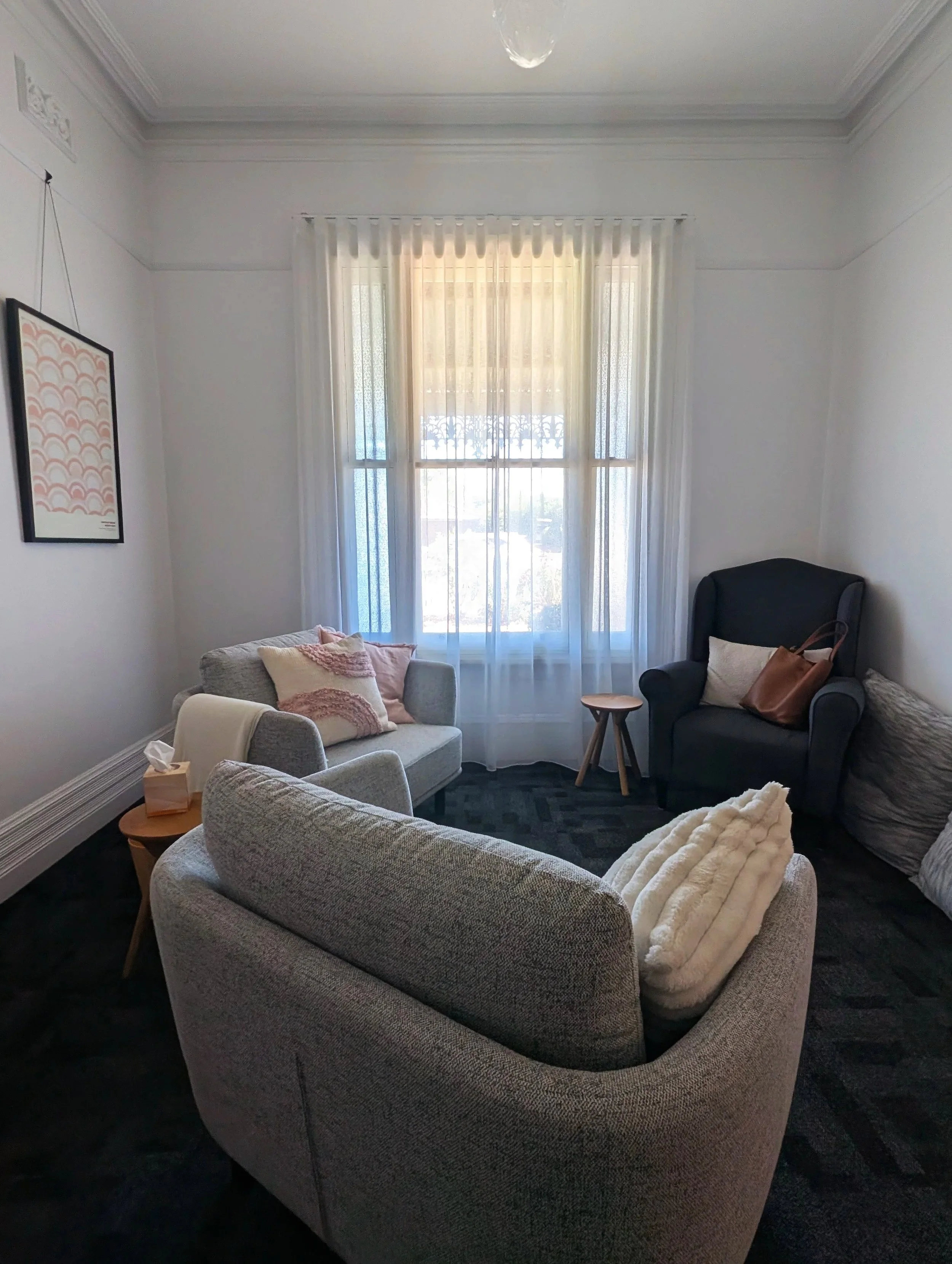
In Clinic
Wildflower Psychology is located at 52 Mount Pleasant Road, Belmont Geelong 3216, within Wanalta Health. Click here for more information.
-

Telehealth
Wildflower Psychology offers both video and telephone sessions from the comfort of your own home. This is a great services for those who have difficulty attending in clinic or live out of the area.
I practice from a neuroaffirming, relationship-based, attachment-focused, and trauma-informed framework.
In practice, this means:
Nervous System Regulation & Safety First: I prioritise emotional safety and physiological regulation, understanding that a calm nervous system is the foundation for well-being.
Autonomy & Collaboration: We work as equals. Your voice, choices, and pacing guide our sessions.
Affirming, Not Modifying: I focus on self-understanding, self-advocacy, and environmental adjustments, rather than behavior modification or compliance-based goals.
Strengths-Based Support: We work together to accommodate your challenges while celebrating and building upon your natural strengths and passions.
My Therapeutic Approach

Qualifications &
Professional Registrations
Master of Clinical Psychology (MPsychClin) – Federation University
Bachelor of Psychology (Honours) – Deakin University
Clinical Psychology Endorsement – Australian Health Practitioner Regulation Agency (AHPRA)
Board-Approved Supervisor – AHPRA
Member of the Association of Psychologists in Private Practice (AAPi)
Therapeutic Approaches & Advanced Training
I draw from a range of evidence-based, relational, and neuroaffirming modalities, tailoring my approach to suit your unique profile and goals. My training and therapeutic frameworks include:
Neuroaffirming & Strengths-Based Practice: Supporting identity discovery, self-advocacy, and environmental accommodations.
Collaborative & Proactive Solutions (CPS): Trained in the Ross Greene model, which views challenging behaviours as developing skills and focuses on collaborative, respectful problem-solving.
Trauma-Informed & Attachment-Based Therapy: Exploring how early relationships and life experiences shape your current sense of safety and connection.
Acceptance & Commitment Therapy (ACT): Advanced training in helping you clarify your values, build psychological flexibility, and navigate difficult emotions.
Person-Centered Therapy: A warm, non-judgmental approach that respects you as the expert of your own lived experience.